

Walmart Inc. — Deep Dive
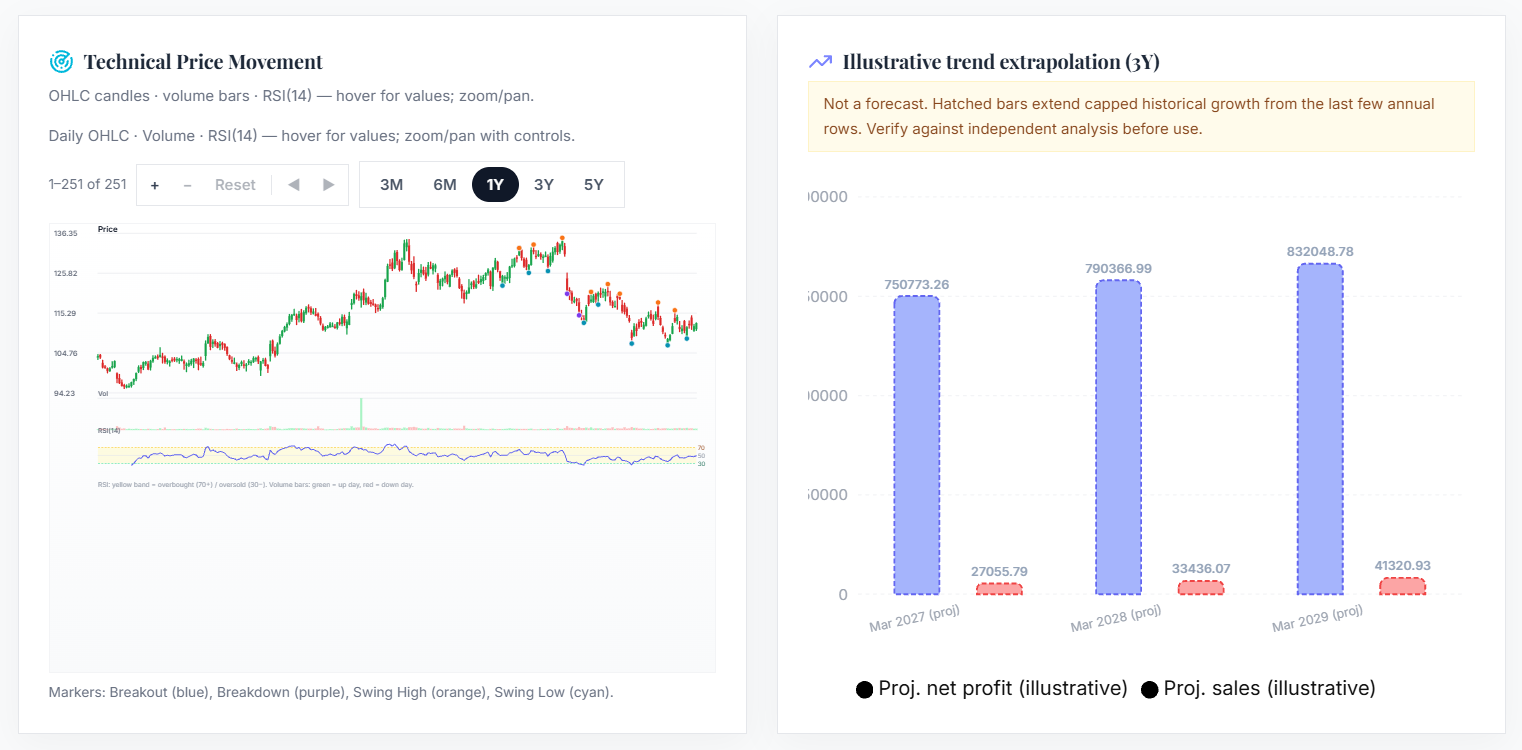
August 11, 2026 · US Markets · CMP: $112.70
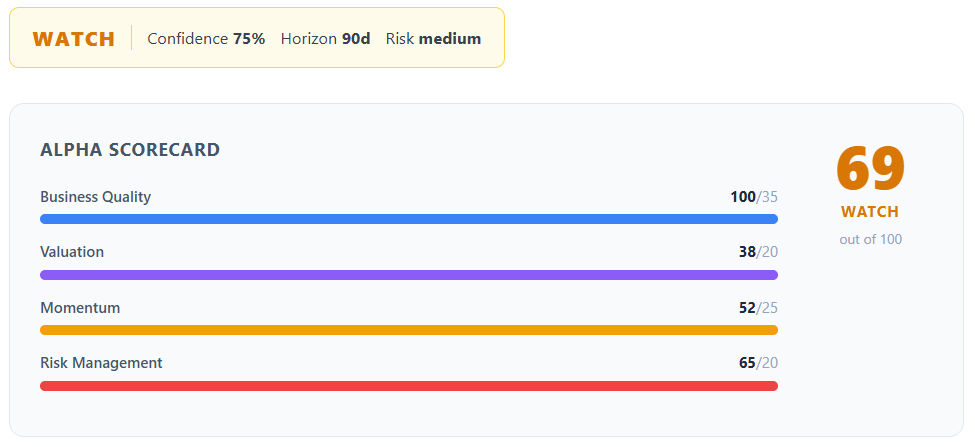
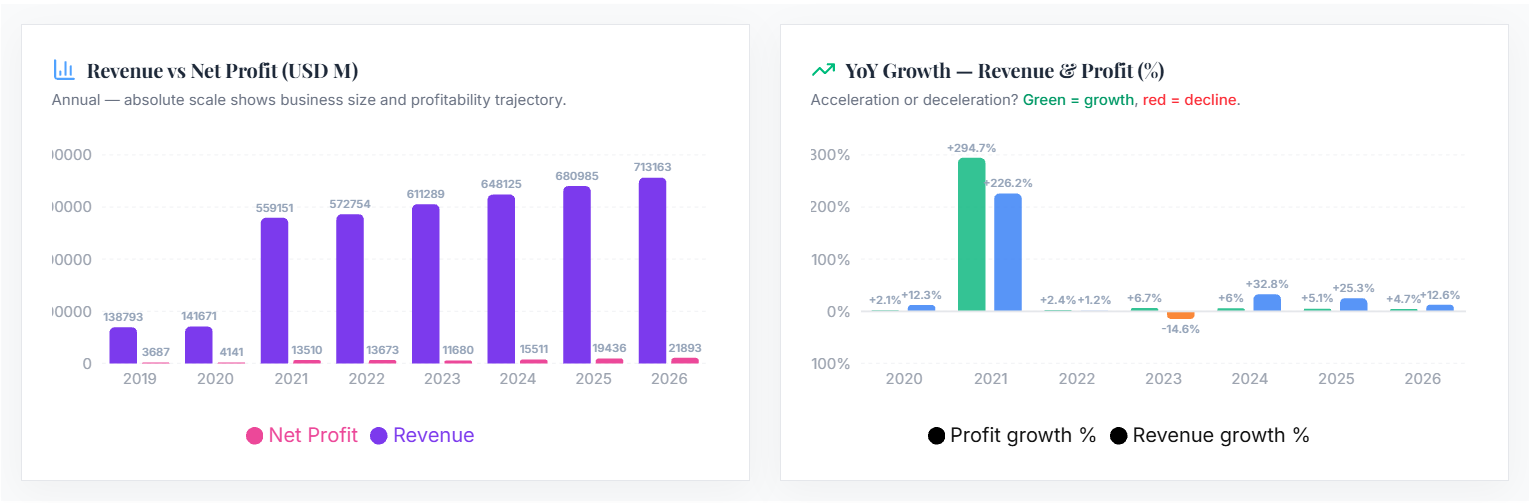
Investment Thesis
Walmart Inc. is strategically leveraging its unparalleled scale and advanced omnichannel capabilities to secure its dominant position in global retail. The company’s persistent investment in e-commerce, advertising, and healthcare segments is driving consistent top-line growth and expanding margins. We believe the market underappreciates the long-term earnings power derived from these diversified, higher-margin ventures, which are enhancing customer lifetime value and creating a more resilient business model.
Competitive Position & Moat
Walmart’s most durable and formidable moat stems from its immense scale and cost leadership. Its global procurement network, sophisticated logistics infrastructure, and ability to negotiate favorable terms with suppliers enable it to offer consistently low prices that are exceptionally difficult for competitors to match, creating a significant competitive barrier. The sheer scale of its operations, encompassing a vast physical footprint and a rapidly growing digital presence, allows for unique efficiencies and distribution advantages. While not a pure network effect, its widespread store network combined with robust e-commerce capabilities provides unparalleled convenience and choice, subtly increasing customer switching costs. The brand’s universal recognition and trust further solidify its market position. Walmart’s pricing power originates from its colossal purchasing volume, which grants it considerable leverage over suppliers, allowing it to manage input costs effectively and pass through competitive prices to consumers, even amidst inflationary pressures.
Growth Drivers vs Headwinds
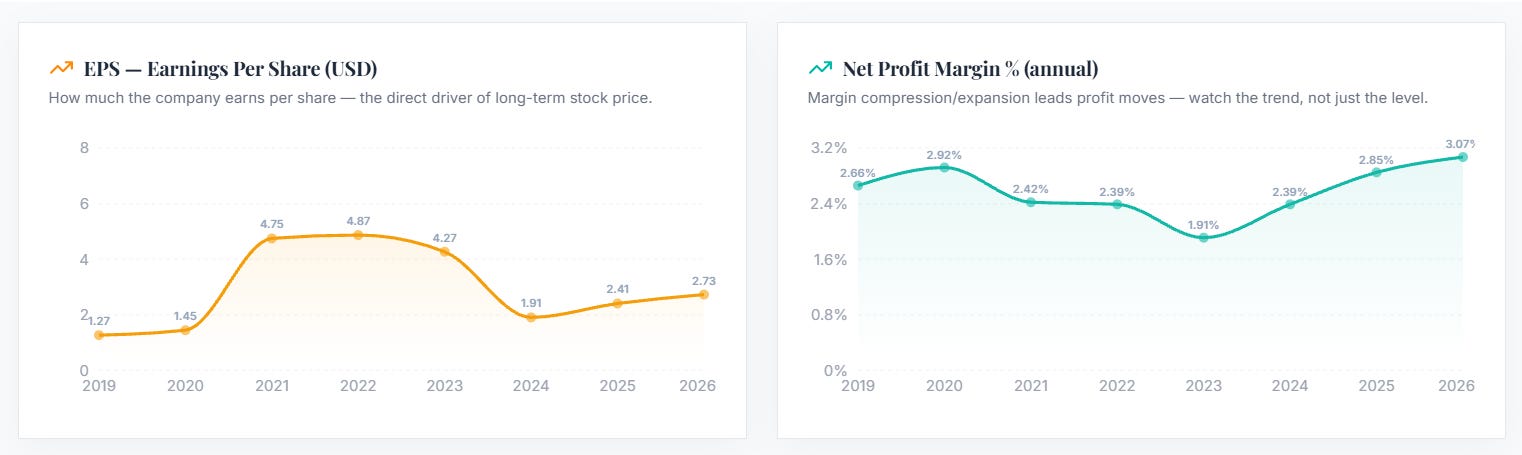
Growth Drivers Headwinds 1. Omnichannel & E-commerce Expansion: Continued investment in online grocery, delivery, and pickup services (e.g., Walmart+ membership) captures market share and increases customer spend, driving consistent revenue growth. 1. Intense Competition: Aggressive competition from Amazon, Target, and other discounters pressures pricing and market share, necessitating continuous investment in competitive pricing and digital offerings. 2. Higher-Margin Business Segments: Diversification into advertising (Walmart Connect), healthcare (Walmart Health), and financial services offers better profitability than traditional retail, contributing to margin expansion. 2. Wage & Labor Cost Inflation: A tight labor market and rising minimum wage pressures in a labor-intensive industry pose ongoing threats to operating margins. 3. International Market Optimization & Partnerships: Targeted optimization in key international markets and strategic local partnerships provide avenues for sustained growth beyond the mature U.S. market. 3. Macroeconomic Uncertainty & Consumer Spending: Economic downturns, high inflation, or shifts in consumer behavior towards extreme frugality could impact discretionary spending and sales volume.
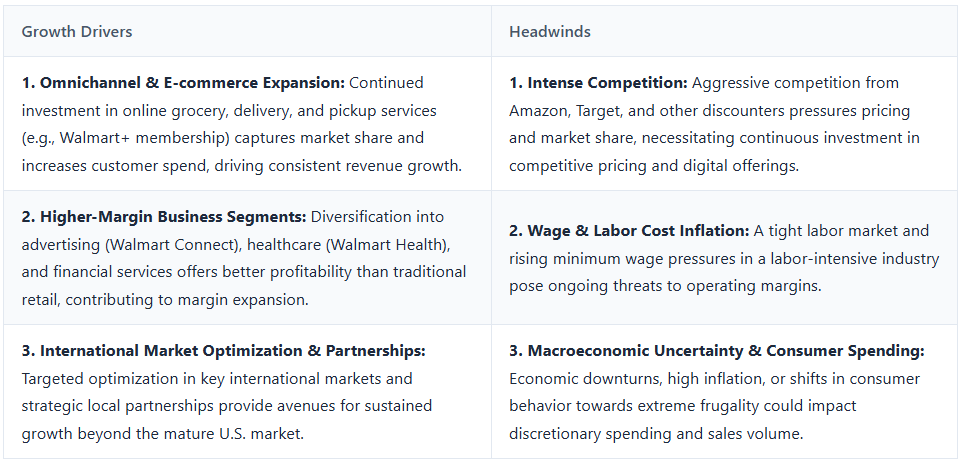
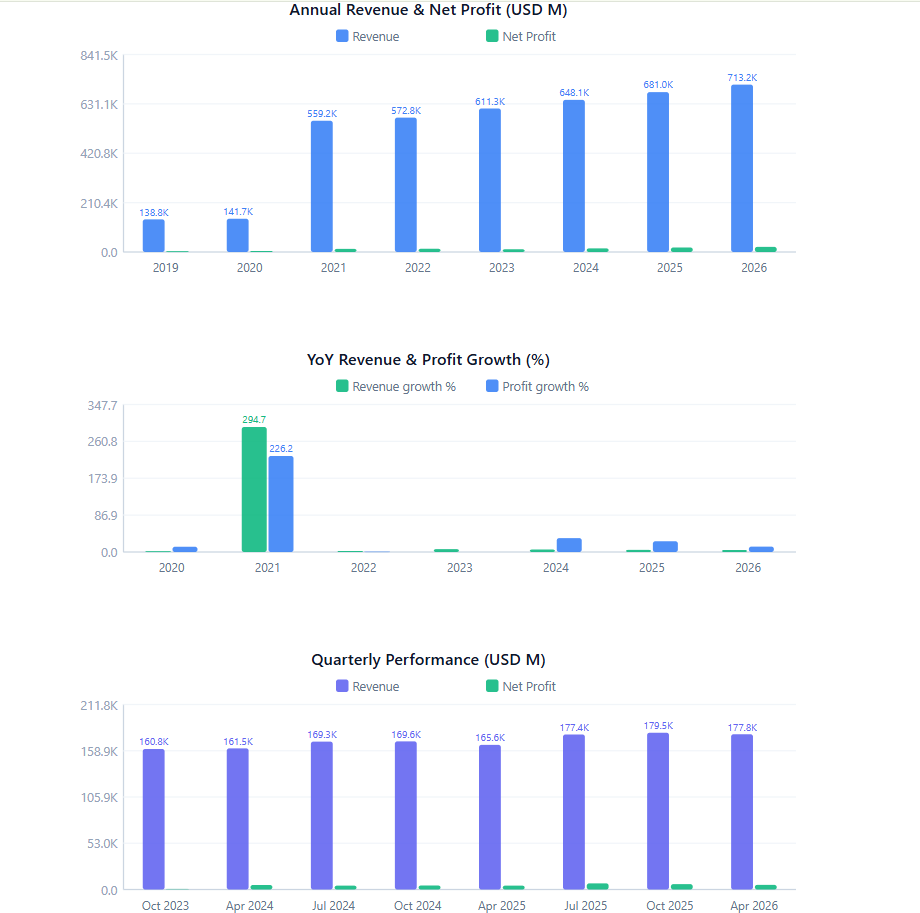
In the base case, we believe the strategic growth drivers, particularly Walmart’s robust omnichannel integration and expansion into higher-margin businesses, will sufficiently counter persistent headwinds, ensuring moderate revenue growth and modest margin improvements.
Scenario Analysis
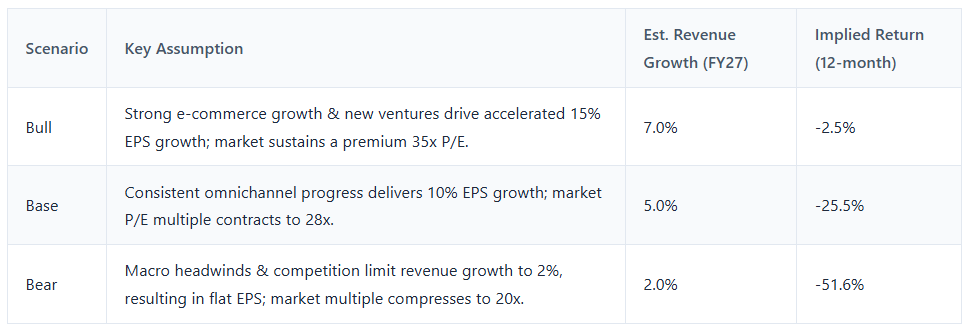
Scenario Key Assumption Est. Revenue Growth (FY27) Implied Return (12-month) Bull Strong e-commerce growth & new ventures drive accelerated 15% EPS growth; market sustains a premium 35x P/E. 7.0% -2.5% Base Consistent omnichannel progress delivers 10% EPS growth; market P/E multiple contracts to 28x. 5.0% -25.5% Bear Macro headwinds & competition limit revenue growth to 2%, resulting in flat EPS; market multiple compresses to 20x. 2.0% -51.6%
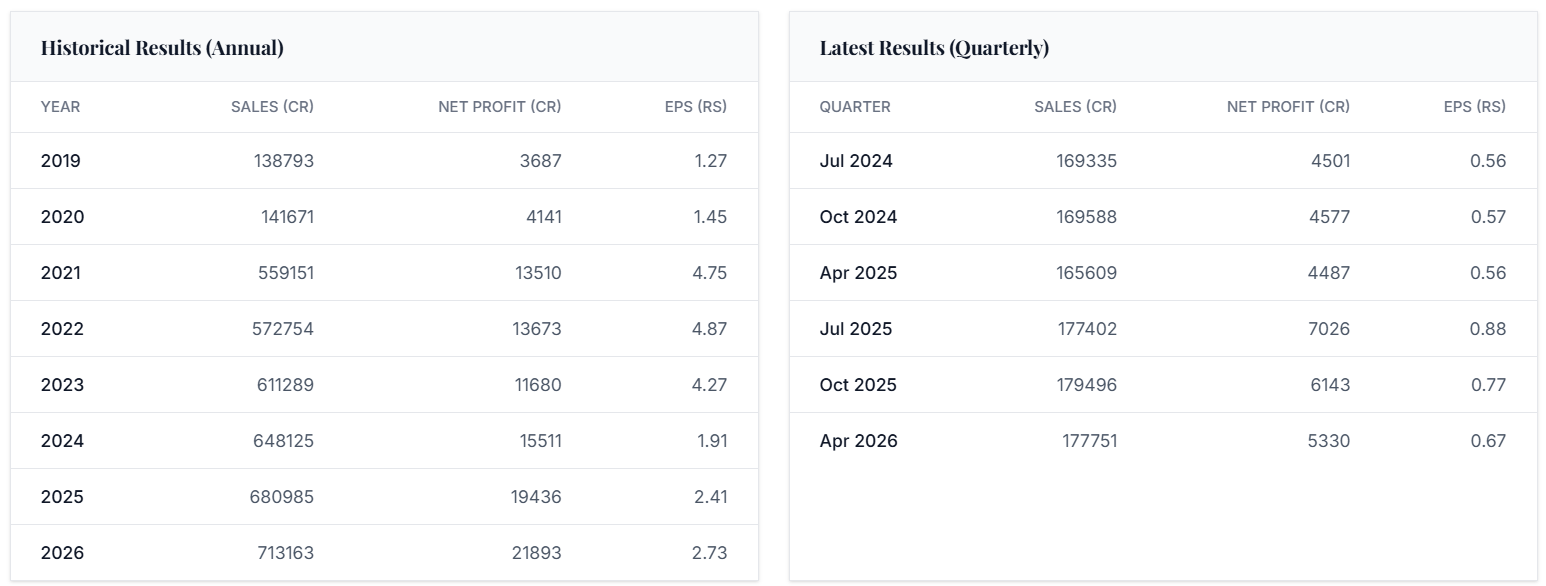
Note: EPS growth is from FY2026 EPS of 2.73.
Valuation & Recommendation
Current Price: USD 112.70
Our primary valuation method relies on a forward price-to-earnings (P/E) multiple applied to our estimated 12-month forward earnings per share (EPS). For FY2026, Walmart reported an EPS of $2.73, and its LTM EPS (ending April 2026) is $2.88. This translates to a current LTM P/E of approximately 39.1x.
For our base case, we project FY2027 revenue growth of 5% and EPS growth of 10% from the FY2026 base, resulting in an estimated FY2027 EPS of $3.00. We believe a target P/E multiple of 28x is more appropriate for a mature, albeit strategically evolving, retailer like Walmart. This multiple reflects its market leadership and ongoing digital transformation efforts but anticipates some normalization from its current elevated level.
Based on these assumptions, our 12-month target price is calculated as: Target Price = Estimated FY2027 EPS × Target P/E = $3.00 × 28 = $84.00.
Implied Upside = (($84.00 − $112.70) / $112.70) × 100 = -25.47%.
Peer Comparison:
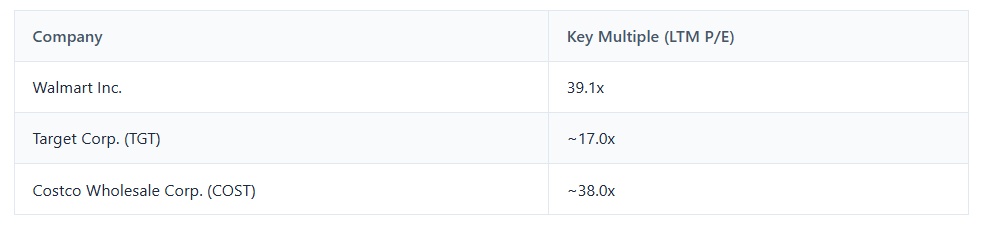
Company Key Multiple (LTM P/E) Walmart Inc. 39.1x Target Corp. (TGT) ~17.0x Costco Wholesale Corp. (COST) ~38.0x
Walmart’s current LTM P/E of 39.1x is significantly higher than that of a traditional discount retailer like Target (typically around 17x) and is comparable to Costco, which benefits from a high-margin membership model. Our base case target P/E of 28x for Walmart, while still at a premium to Target, suggests a more sustainable valuation reflecting its strong competitive position but acknowledging its maturity. The substantial negative implied return from our base case indicates that Walmart is significantly overvalued at its current price.
Recommendation: AVOID — The current market valuation of Walmart Inc. implies growth and margin expansion beyond what we believe is sustainable for a mature retailer, leading to a substantial downside to our fair value estimate.
📊 Financial Performance
This research is for informational purposes only and does not constitute investment advice.